The first time it happened, Tunde didn’t think much of it.
After a stressful day, he placed a small sports bet—a few thousand naira.
He won.
The excitement lingered long after the match ended.
A few days later, he tried again.
Then again.
Soon, checking betting odds became part of his daily routine.
Around the same time, another habit grew stronger: late nights spent watching pornography.
At first, neither betting nor watching porn felt dangerous.
But months later, things looked different.
He was checking betting apps during work hours, losing money he couldn’t afford, and feeling restless when he tried to stop.
He promised himself he would quit, but the promises rarely lasted.
The same pattern appeared with pornography.
He spent more time than he intended, felt guilty afterward, deleted his browsing history, and made private commitments to change—only to return to the same behavior.
What confused him the most was that he genuinely wanted to stop.
He was educated. He understood the consequences.
He knew the habits were hurting him. Yet he felt trapped.
Many people struggling with pornography or gambling addiction describe this same cycle.
They’re not choosing the behavior because they enjoy the consequences.
They’re caught in a loop their brain has learned to repeat.
Understanding that loop is one of the first steps toward recovery.
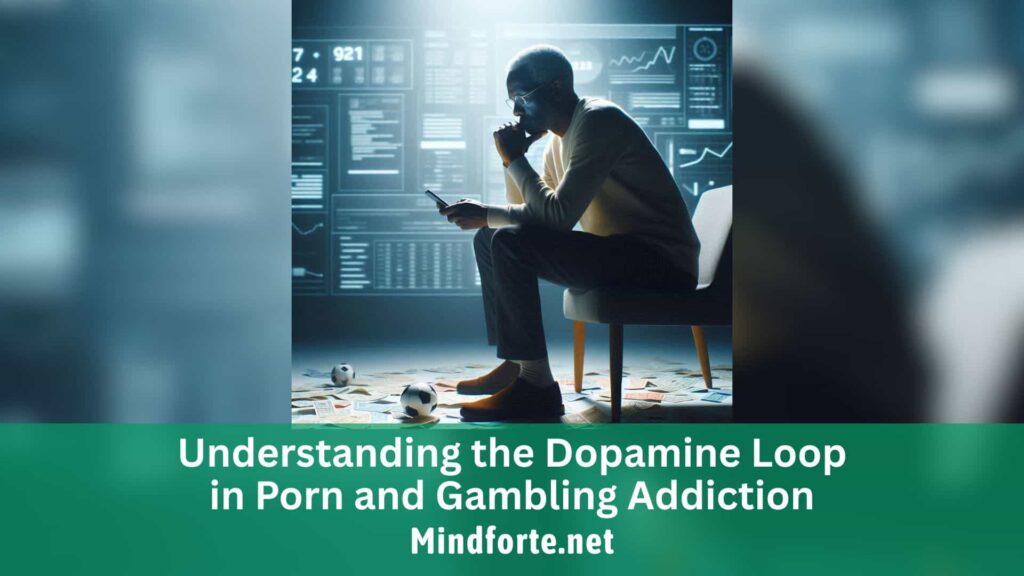
Table of Contents
- Why Smart People Get Stuck
- The Real Question
- What Dopamine Actually Does
- Why Anticipation Matters
- The Dopamine Loop Step by Step
- Why Pornography Creates Strong Dopamine Responses
- Why Gambling and Sports Betting Feel Compelling
- Why Sports Betting Becomes Routine
- When the Brain Starts Prioritizing Addiction
- The Cost Builds Gradually
- What Addiction Starts Taking Away
- When Recreational Use Becomes Something More
- The Emotional Cost Few Discuss
- Why Shame Makes Recovery Harder
- Why Many Nigerians Delay Seeking Help
- Signs You May Need Therapy
- Why Understanding Comes Before Recovery
- A Question Worth Asking
- How Therapy Helps Break the Dopamine Loop
- Understanding Triggers Before Cravings
- A Different Future Starts With Understanding
- The Next Step Might Be Smaller Than You Think
- We’d Love to Hear From You
Why Smart People Get Stuck
One of the most damaging myths about addiction is that it only happens to “weak” people.
In reality, many who struggle are hardworking, intelligent, and responsible—students, professionals, parents, respected community members.
This misunderstanding creates shame. People blame themselves:
- “If I were stronger, I would stop.”
- “If I had more discipline, this wouldn’t be happening.”
- “If I really cared about my family, I would quit.”
But shame rarely leads to lasting change. Understanding does.
Learning how the brain works helps explain why quitting feels so difficult.
Addiction involves learned patterns in the brain, repeated over time.
This doesn’t erase personal responsibility, but it does show why recovery requires more than willpower.
The Real Question
Many clients who seek psychological help arrive asking: “What’s wrong with me?”
A better question is: “What’s happening inside my brain?”
That shift matters.
Once people understand the mechanisms behind addictive behavior, they stop seeing themselves as broken.
They begin to see a problem that can be understood, managed, and treated.
This is why therapy can be so powerful.
A trained Clinical Psychologist helps clients move beyond self‑judgment and toward understanding.
That understanding becomes the foundation for lasting recovery.
What Dopamine Actually Does
Dopamine is often called the “pleasure chemical,” but that’s an oversimplification.
Researchers now know dopamine plays a key role in:
- Motivation
- Learning
- Anticipation
- Reward‑seeking
- Attention
When the brain experiences something rewarding, dopamine marks that experience as important.
The brain essentially says: “Pay attention. Remember this. Do it again.”
This process is useful for survival—it helps us repeat behaviors that support life and wellbeing.
But certain activities can activate this system so intensely and so often that the brain begins prioritizing them above healthier activities.
That’s where problems begin.
Why Anticipation Matters
Many assume dopamine spikes only after a reward.
In reality, the brain often releases dopamine before the reward arrives.
The anticipation itself becomes rewarding.
This explains why:
- Watching betting odds feels exciting
- Opening a gambling app feels exciting
- Searching for pornography feels exciting
- Planning the next opportunity feels exciting
The brain starts responding to the expectation of reward.
Over time, anticipation becomes part of the addictive cycle.
This is where the dopamine loop takes shape—and once it’s established, breaking free feels far harder than most people expect.
The Dopamine Loop Step by Step
Addictive behaviors often follow a predictable cycle.
The details may differ between pornography, gambling, and sports betting, but the underlying pattern is strikingly similar.
Understanding this cycle helps explain why people feel trapped even when they want to stop.
Step 1: The Trigger
Every addictive behavior begins with a trigger.
Sometimes it’s obvious, other times subtle.
Common triggers include stress, loneliness, boredom, anxiety, anger, rejection, financial pressure, or fatigue.
For some, seeing a betting advertisement is enough.
For others, being alone with a smartphone late at night becomes the cue.
Over time, the brain links certain emotions or environments with the addictive behavior.
The connection becomes automatic—stress feels like a reason to gamble, loneliness feels like an invitation to watch pornography.
Step 2: The Craving
Once triggered, craving follows.
Craving is not just desire—it’s the brain’s expectation that a behavior will bring relief or excitement.
Dopamine plays a central role here.
When the brain anticipates a reward, dopamine activity rises.
Thoughts, images, and memories surface, and the urge grows stronger.
This is why cravings feel overwhelming—the brain is preparing for what it believes will be rewarding.
Step 3: The Behavior
At this stage, the person acts: placing the bet, opening the app, visiting the site.
Relief often arrives quickly.
Stress fades, anxiety quiets, boredom disappears.
The brain pays attention, remembers, and learns.
Step 4: The Reward
The reward may be excitement, pleasure, escape, relief, or temporary confidence.
Even if it lasts only briefly, the brain records the experience: “This helped.”
It doesn’t evaluate whether the behavior was healthy—only whether it felt rewarding.
Step 5: Reinforcement
Finally, reinforcement keeps the cycle alive.
The brain stores information about the trigger, craving, behavior, and reward.
Each repetition strengthens the pathway, making future repetitions easier.
Over time, the habit feels automatic.
Why Pornography Creates Strong Dopamine Responses
Pornography offers the brain something highly stimulating: novelty.
Humans naturally pay attention to new experiences, and online pornography provides endless novelty—new images, videos, and stimulation.
Research shows that novel sexual stimuli can strongly activate reward pathways.
This is why many people spend far longer than intended.
What begins as ten minutes can stretch into an hour, because the brain keeps seeking fresh stimulation.
Why Gambling and Sports Betting Feel Compelling
Gambling introduces another powerful ingredient: uncertainty.
Humans are wired to respond strongly to unpredictable rewards.
The possibility of winning—even if unlikely—produces intense dopamine responses.
The brain becomes fascinated by “maybe.”
The next spin might win.
The next game might pay off.
That uncertainty keeps attention locked in place.
The Hidden Power of Near Misses
Near misses—coming close to winning but still losing—are especially powerful.
Losing by one goal or missing a jackpot by a single symbol can activate reward pathways almost like a win.
The brain interprets it as evidence that success is near, motivating continued play.
Why Sports Betting Becomes Routine
Modern betting platforms make engagement effortless: live betting, constant access, multiple options, real‑time notifications, instant deposits.
Opportunities appear throughout the day.
For many, sports betting shifts from entertainment to routine.
Checking odds becomes habitual, matches feel emotionally charged, and losses trigger the urge to recover.
This cycle is known as chasing losses.
The Trap of Chasing Losses
After a loss, frustration and anxiety rise.
Instead of stepping away, many place another bet to recover what was lost.
Emotional decision‑making overrides logic, and the largest losses often occur during these attempts.
When the Brain Starts Prioritizing Addiction
Over time, the brain begins valuing the addictive behavior more than healthier rewards.
Activities like family time, exercise, hobbies, or friendships lose appeal.
Meanwhile, thoughts about pornography or gambling grow stronger.
The dopamine loop tightens, and consequences spread into every area of life.
The Cost Builds Gradually
Addiction rarely destroys everything at once.
The damage accumulates: secrecy, guilt, financial strain, emotional isolation.
Months later, the impact becomes undeniable—relationships, work, finances, and mental health all suffer.
By the time many seek help, the problem feels much larger than it did at the start.
What Addiction Starts Taking Away
Most people notice the visible consequences first—money, time, productivity, arguments, broken promises.
But addiction often takes something deeper before those losses appear: a person’s relationship with themselves.
Confidence fades.
Commitments feel harder to keep.
Secrets grow heavier.
Many clients say the most painful part wasn’t the money lost or the hours spent watching pornography—it was losing trust in themselves.
They wanted to stop.
They meant every promise.
Yet the cycle continued.
That gap between intention and behavior creates profound emotional distress.
When Recreational Use Becomes Something More
Clients often ask: “How do I know if this has become an addiction?”
There’s rarely a single turning point.
The shift happens gradually, but there are warning signs:
- Needing more stimulation: Content that once felt exciting no longer satisfies. The brain seeks greater novelty or stronger thrills.
- Continuing despite consequences: Financial strain, poor sleep, relationship conflict, or declining work performance—but the behavior persists.
- Irritability when trying to stop: Restlessness, frustration, or anxiety appear when reducing the behavior.
- Using it as a coping tool: Stress automatically triggers the addictive behavior, while healthier coping strategies fade.
- Preoccupation: Thoughts about gambling, pornography, or betting occupy more mental space than before.
The Emotional Cost Few Discuss
Addiction is often described in terms of behavior, but the emotional toll is just as significant.
Shame, loneliness, anxiety, low self‑esteem, hopelessness, and self‑criticism all reinforce the cycle.
The behavior causes distress, the distress fuels cravings, and the cravings lead back to the behavior.
This is why addiction feels confusing—the very habit causing pain seems to offer temporary relief.
But that relief never lasts.
Why Shame Makes Recovery Harder
Shame is one of the strongest barriers to recovery. Many people believe:
- “If others knew, they would judge me.”
- “If I seek help, people will think less of me.”
- “I should be able to fix this myself.”
These beliefs delay treatment.
The longer someone struggles alone, the stronger the dopamine loop becomes.
At Mindforte Psychology Clinic, many clients arrive after months or years of trying privately—watching self‑help videos, making promises, attempting to quit dozens of times—without ever speaking openly.
When they finally speak up, one of the first realizations is simple: they are not alone.
Why Many Nigerians Delay Seeking Help
Stigma remains a major challenge.
In many communities, addiction is seen as a moral failure rather than a mental health concern.
Advice often sounds like: “Be stronger.” “Just stop.” “Pray harder.”
While faith and discipline can be valuable, they don’t fully address the psychological mechanisms driving addiction.
Misunderstanding prevents people from seeking professional support.
Instead of reaching out early, they wait—sometimes until relationships are damaged, debt is overwhelming, or depression develops alongside the addiction.
Early intervention makes recovery easier, but stigma convinces many to struggle alone.
Signs You May Need Therapy
While only a professional can assess fully, certain signs suggest therapy may help:
- Repeated failed attempts to stop
- Growing emotional distress (anxiety, shame, guilt, hopelessness)
- Relationship strain and loss of trust
- Financial consequences from gambling
- Increasing isolation and secrecy
- Cravings that feel stronger than your ability to resist
Why Understanding Comes Before Recovery
Many try to stop addictive behaviors without first understanding them.
That often leads to frustration.
When clients learn how triggers, cravings, dopamine, reinforcement, and coping interact, they stop fighting an invisible enemy.
They begin recognizing the actual processes keeping the addiction alive.
Recovery is not simply about removing a behavior—it’s about building healthier ways of responding to life.
A Question Worth Asking
If gambling, sports betting, or pornography disappeared from your life tomorrow, what emotions would remain? Stress? Loneliness? Anxiety? Boredom? Pain?
For many, the answer to that question reveals where healing truly needs to begin.
How Therapy Helps Break the Dopamine Loop
Once people understand how the dopamine loop works, they often ask: “Can my brain change?”
The answer is encouraging: yes.
The brain can learn new patterns throughout life.
This ability, called neuroplasticity, means the same processes that created addictive habits can also support recovery.
It takes time, consistency, and a willingness to learn healthier ways of responding to stress, boredom, loneliness, and anxiety.
This is where therapy becomes invaluable.
Understanding Triggers Before Cravings
Many try to resist addictive behavior once the craving has already begun.
By then, the urge can feel overwhelming.
Therapy helps identify triggers earlier in the cycle.
For example, gambling urges may appear after workplace stress, financial worries, or arguments.
Pornography cravings may surface during late‑night isolation, rejection, or boredom.
Recognizing these patterns creates opportunities to intervene before cravings gain momentum.
Awareness becomes a powerful recovery tool.
How CBT Interrupts Addictive Patterns
Cognitive Behavioural Therapy (CBT) is one of the most effective approaches in addiction treatment.
It helps clients examine the thoughts and emotions driving their habits.
Common beliefs include:
- “One more time won’t matter.”
- “I’ve already failed today.”
- “I need this to relax.”
- “I can stop whenever I want.”
Therapy challenges these thoughts and replaces them with healthier perspectives.
Over time, new thinking patterns weaken the automatic pathways that fuel addiction.
Research consistently supports CBT as an effective treatment for a wide range of addictive behaviors.
Building Better Sources of Reward
Recovery is not only about stopping a behavior—it’s about rebuilding life.
Many clients arrive with hobbies neglected, friendships weakened, and goals abandoned.
Therapy helps reintroduce healthier sources of satisfaction, such as:
- Exercise
- Meaningful social connections
- Creative activities
- Learning new skills
- Faith practices
- Volunteer work
These activities provide genuine reward and fulfillment, gradually becoming part of a balanced lifestyle.
Why Relapse Prevention Matters
Recovery doesn’t mean cravings disappear forever.
Urges often return during stressful times.
Relapse prevention prepares clients for these moments by teaching them to:
- Recognize warning signs
- Manage high‑risk situations
- Respond to setbacks constructively
- Seek support early
This reduces fear and builds confidence. A setback becomes a lesson, not a failure.
Recovery Is Often Gradual
Movies portray recovery as dramatic breakthroughs. In reality, progress is quieter:
- Less time spent thinking about gambling
- A week without pornography
- A stressful day passed without betting
- Better sleep
- Healthier relationships
- Reduced financial pressure
- Renewed self‑respect
Individually, these changes may seem small. Together, they represent meaningful progress.
What Healing Looks Like Over Time
Successful recovery isn’t about willpower alone. It’s about awareness, coping strategies, and consistent support.
Over time, clients often report:
- Improved emotional stability
- Better concentration
- Healthier relationships
- Increased confidence
- Reduced shame
- Greater self‑control
- Stronger mental wellbeing
Life shifts from managing cravings to pursuing meaningful goals.
Seeking Help Is Strength
Many spend years asking: “Do I need therapy?”—often after repeated attempts to cope alone.
Seeking support is wisdom, rather than weakness.
Therapy offers tools, guidance, and space for growth.
Beyond addiction recovery, clients gain emotional regulation, resilience, and healthier relationships.
A Different Future Starts With Understanding
Addiction thrives in secrecy and confusion.
Understanding weakens the grip of addiction.
When people learn how dopamine, cravings, triggers, and reinforcement interact, they stop asking “Why am I like this?” and start asking “What can I do differently?”
That shift creates possibility.
Recovery becomes practical, measurable, and achievable.
Whether the struggle involves pornography, gambling, or sports betting, change is possible with the right support.
The Next Step Might Be Smaller Than You Think
You don’t need to have everything figured out before seeking help.
You don’t need to wait until things get worse.
And you don’t need to carry the burden alone.
If you’ve been struggling with addictive behaviors or noticing signs that therapy may help, speaking with a qualified Clinical Psychologist can provide clarity and a recovery plan tailored to your life.
At Mindforte Psychology Clinic, we offer compassionate support for individuals navigating addiction, anxiety, emotional distress, and life transitions.
For clients in Abuja and beyond, Online Therapy in Nigeria makes professional help more accessible.
Book an appointment: www.mindforte.net/booking
We’d Love to Hear From You
Many people struggle silently, believing they are alone. They are not.
What do you think makes addictive behaviors so difficult to talk about openly?
Share your thoughts in the comments—your voice may help someone else feel less alone.
References and Sources
- National Institute on Drug Abuse Addiction and the Brain
- National Institute of Mental Health Psychotherapies
- World Health Organization Mental Health
- American Psychological Association Understanding Addiction
- Yale Medicine Gambling Disorder Overview
- National Center for Biotechnology Information Neuroplasticity and Addiction Recovery
- National Center for Biotechnology Information Cognitive Behavioral Therapy for Addiction Treatment
- National Center for Responsible Gaming Gambling and Reward Systems
- World Health Organization International Classification of Diseases Behavioural Addictions Information
- Harvard Health Publishing Understanding the Reward System and Dopamine