For many people living with anxiety, the first therapy session can feel overwhelming.
Sitting across from a stranger, trying to explain months of racing thoughts and sleepless nights, often leaves clients feeling exposed and unsure.
In Nigeria, stigma makes this even harder. Clients often arrive carrying the weight of comments like:
- “You think too much. Just pray harder.”
- “Strong people don’t need therapy.”
- “Snap out of it. Other people have it worse.”
By the time they walk into a clinic, they are already battling shame, doubt, and fear.
If that first session feels confusing or unhelpful, many decide not to return — missing out on the support that could change their lives.
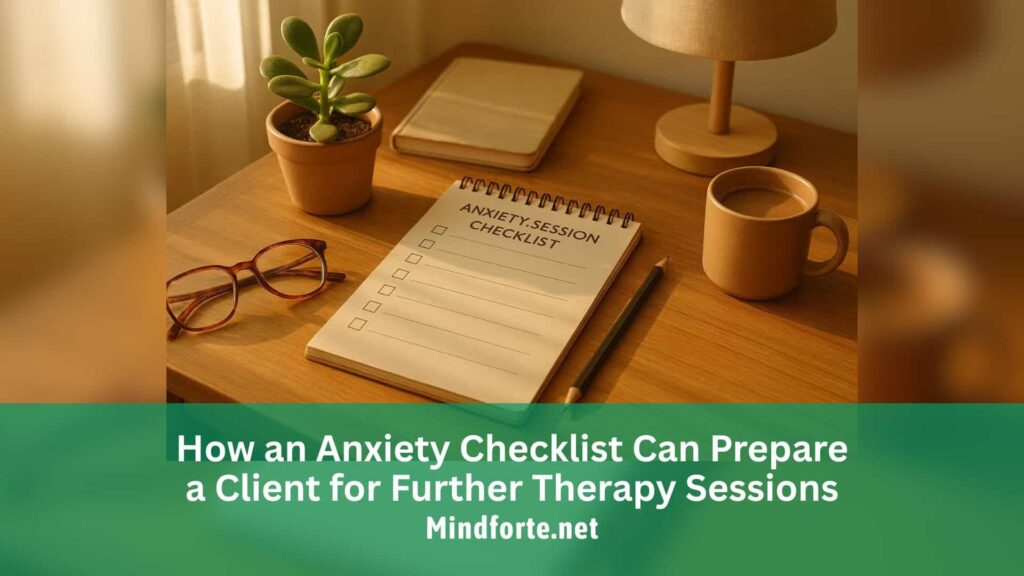
This is where an anxiety checklist becomes a powerful tool.
How the Checklist Helps Clients
The checklist is designed to make the first session feel structured, safe, and purposeful.
Instead of leaving clients to struggle through scattered thoughts, it guides the conversation in a way that validates their experience and prepares them for future sessions.
Here’s how it works:
- Physical Symptoms
Clients are asked about racing hearts, chest tightness, dizziness, or restlessness. Naming these symptoms helps them see their experiences as real, not imagined. - Thought Patterns
Questions explore “what if” loops and worst‑case thinking. This helps clients notice how their thoughts fuel anxiety. - Situational Triggers
Clients reflect on when anxiety shows up most — at work, in social settings, or at home. This builds awareness of patterns. - Coping Strategies Already Tried
The checklist acknowledges prayer, herbal remedies, avoidance, or even substance use. This shows respect for what clients have already attempted. - Impact on Daily Life
Clients describe how anxiety affects relationships, work, parenting, or health. This highlights the importance of therapy beyond just “worrying too much.” - Readiness for Therapy and Goals
Clients share what they hope therapy will achieve and what fears they carry about starting. This sets direction for future sessions.
The Impact on Clients
Using the checklist changes the experience of therapy from the very first meeting:
- Safety: Clients feel understood because their symptoms are named and validated.
- Hope: Therapy feels structured, not like endless talking.
- Engagement: Clients sense progress early, making them more likely to continue.
One client said after her first session:
“I walked in with my heart racing, but I left feeling lighter — like maybe I wasn’t crazy after all.”
Why This Matters
When anxiety is managed in the first encounter, clients are more likely to stay in therapy.
The checklist becomes more than a tool for the therapist — it becomes a bridge for the client, helping them move from fear into healing.
It prepares them for further sessions by:
- Giving clarity about their symptoms and triggers
- Building trust in the therapeutic process
- Setting goals that guide ongoing work
Ready to Take the First Step?
If you’ve been struggling with anxiety and wondering whether therapy could help, we’d love to support you at Mindforte Psychology Clinic.
Your first session can feel safe, structured, and purposeful. Book an appointment here.
Join the Conversation
If you were meeting a therapist for the very first time, what’s one question you’d want them to ask you?
Share your thoughts in the comments — your answer might help someone else feel less alone.