Something important is happening in Nigeria’s mental health space. More people are quietly reaching for their phones when they feel overwhelmed.
Some join anonymous chat groups. Some search “Do I need therapy?” Others type “I need a therapist in Nigeria” and hope no one sees their history.
This shift is especially clear among people struggling with addiction—whether it’s drugs, alcohol, pornography, gambling, social media, or gaming.
People want help. But they want help that feels safe, private, and accessible.
Digital recovery tools are stepping in. The question is: will addiction recovery in Nigeria become fully digital, or are we moving toward a more balanced model?
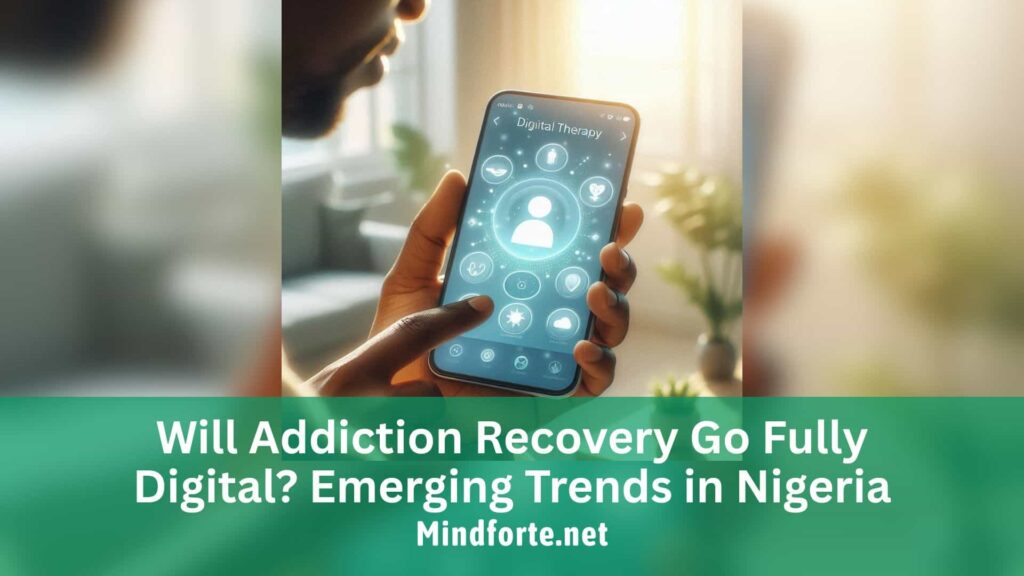
Table of Contents
- The Reality of Addiction in Nigeria
- Why Waiting Too Long Hurts
- Why Traditional Recovery Struggles
- The Rise of Digital Recovery
- Why Digital Recovery Appeals
- The Limits of Digital Recovery
- The Future: Hybrid Recovery
- Why Clinical Psychologists Still Matter
- If You’re Wondering Whether You Need Help
- A Gentle Invitation
The Reality of Addiction in Nigeria
Addiction is rising faster than many realize.
According to Nigeria’s first-ever National Drug Use Survey (2018)—conducted by the National Bureau of Statistics with support from the United Nations Office on Drugs and Crime (UNODC) and the European Union—about 14.4% of Nigerians aged 15–64 (approximately 14.3 million people) reported using at least one psychoactive substance in the past year. This prevalence was more than twice the global average at the time and highlights the growing challenge of substance use in the country, signaling an urgent need for expanded treatment and mental health support services.
That number has likely grown.
But substance use is only part of the story. Behavioral addictions are increasing too:
- Excessive social media use
- Pornography and masturbation
- Gambling
- Compulsive shopping
- Smartphone dependency
- Gaming
These affect emotional stability, relationships, school, work, and self‑esteem.
Yet many people don’t seek help—because of stigma, family pressure, or fear of being judged.
Walking into a clinic still feels intimidating for many. Digital support feels safer.
Why Waiting Too Long Hurts
Addiction often starts small—stress relief, curiosity, or escape. Over time, it grows into:
- Loss of control
- Hiding behavior
- Shame
- Failed attempts to stop
- Anxiety or low mood when not using
- Withdrawal from loved ones
The National Institute on Drug Abuse explains that addiction is a chronic condition affecting the brain and behavior, making self‑control very difficult without structured help.
Waiting too long worsens distress, depression, and relationship problems.
Why Traditional Recovery Struggles
Nigeria lacks enough certified addiction specialists, trained rehab staff, and affordable outpatient programs.
Some centers are costly.
Families fear shame.
Young people want privacy and flexibility.
This gap is why digital recovery options are growing.
The Rise of Digital Recovery
Digital recovery is becoming a movement. Nigerians now use:
- Online Therapy
Teletherapy became common after COVID‑19. People book remote sessions for counseling, relapse prevention, trauma work, and behavior change. Research shows online therapy can be as effective as in‑person care. - Recovery Apps
Apps help track cravings, monitor usage, journal triggers, practice CBT exercises, and join chat‑based support. Global apps like I Am Sober and Reframe are popular, and local developers are entering the space. - Virtual Support Groups
Zoom‑based Narcotics Anonymous meetings give anonymity and consistency. Students, professionals, and young adults join from anywhere. - AI‑Assisted Tools
AI is being used worldwide to monitor relapse risk, mood, and stress. Nigeria is beginning to adopt these in private facilities. - WhatsApp Check‑Ins
Counselors and psychologists use WhatsApp for structured follow‑ups. It feels familiar and accessible.
Why Digital Recovery Appeals
- Privacy: No waiting rooms or fear of gossip
- Convenience: Accessible anytime, anywhere
- Affordability: Often cheaper than inpatient rehab
- Less Stigma: Easier to seek help quietly
- Early Intervention: A first step before in‑person therapy
- Youth Comfort: Digital natives prefer online support initially
The Limits of Digital Recovery
Digital tools cannot replace everything. Limitations include:
- Severe withdrawal symptoms needing medical care
- High‑risk cases (suicidal thoughts, psychosis, violent behavior)
- Poor internet access
- Unregulated apps without clinical oversight
- Lack of physical assessment (important for spotting withdrawal signs)
The Future: Hybrid Recovery
Nigeria is moving toward a hybrid model:
- In‑person therapy for deeper issues
- Digital tools for daily support
- Rehab centers offering virtual follow‑up
- Online therapy as a safe entry point
- Families using digital education to support loved ones
This balance offers the best outcomes.
Why Clinical Psychologists Still Matter
Digital tools cannot replace evidence‑based treatment, trauma‑informed care, CBT, relapse prevention, or crisis management. Confidentiality and ethical responsibility remain essential.
At Mindforte Psychology Clinic, we combine:
- Evidence‑based therapy
- Compassionate support
- Personalized recovery plans
- Online and in‑person sessions
- Long‑term relapse prevention
Because recovery doesn’t only deal with stopping the behavior—it’s focuses on healing the pain underneath.
If You’re Wondering Whether You Need Help
Ask yourself:
- Do you hide your use?
- Do you feel ashamed afterward?
- Do you try to stop but return to it?
- Is it affecting your mood, relationships, or work?
- Does it leave you feeling empty or anxious?
If you answered “yes” to any of these, therapy may help. Reaching out is not weakness—it is maturity. Digital tools can support you, but therapy offers deeper healing.
A Gentle Invitation
If you feel ready to explore support—quietly or openly—we are here. You can begin with online sessions or walk into our clinic when comfortable.
Book an appointment: www.mindforte.net/booking
Reflection:
What part of digital addiction recovery feels most hopeful—or most concerning—for you?
References
- National Institute on Drug Abuse – Science of Addiction
https://nida.nih.gov/publications/drugs-brains-behavior-science-addiction - Andersson, G. et al. (2014). Internet-based psychological treatments
World Psychiatry
https://www.ncbi.nlm.nih.gov/pmc/articles/PMC4219070/ - American Psychological Association – Telepsychology Guidelines
https://www.apa.org/about/policy/telepsychology-revisions - National Drug Use Survey–NBS (NigerianStat):
https://nigerianstat.gov.ng/elibrary/read/881 (National Bureau of Statistics) - EU Archive Summary of Survey (UNODC-supported):
https://www.eeas.europa.eu/node/57381 (EEAS) - Africa Check explanation and context:
https://africacheck.org/fact-checks/reports/how-many-nigerians-use-drugs (Africa Check)